Selecting an appropriate base for your outdoor living space is one of the important decisions that affect your property’s value and your daily pleasure. When backyard restorations are being planned by their homeowners, the primary discussion usually revolves around a Concrete Patio vs. a Paver Patio: Which Is Better for Your Home? This option includes balancing initial costs against long-lasting durability and visual charm.
If you want a smooth and modern surface or a classic stone look, then you need to know how these materials perform over time. This guide investigates the merits and demerits of each popular patio installation option for owners. This helps in determining the perfect option according to their lifestyle and budget.
Concrete Patio vs Paver Patio Comparison: Aesthetics & Design
When comparing concrete patios vs. paver patios, most people notice visual versatility first. Concrete provides a clean and flawless look that can be brush-finished for a non-slip surface or stamped to copy other materials. It gives a minimalist and uniform background that works well with modern architecture.
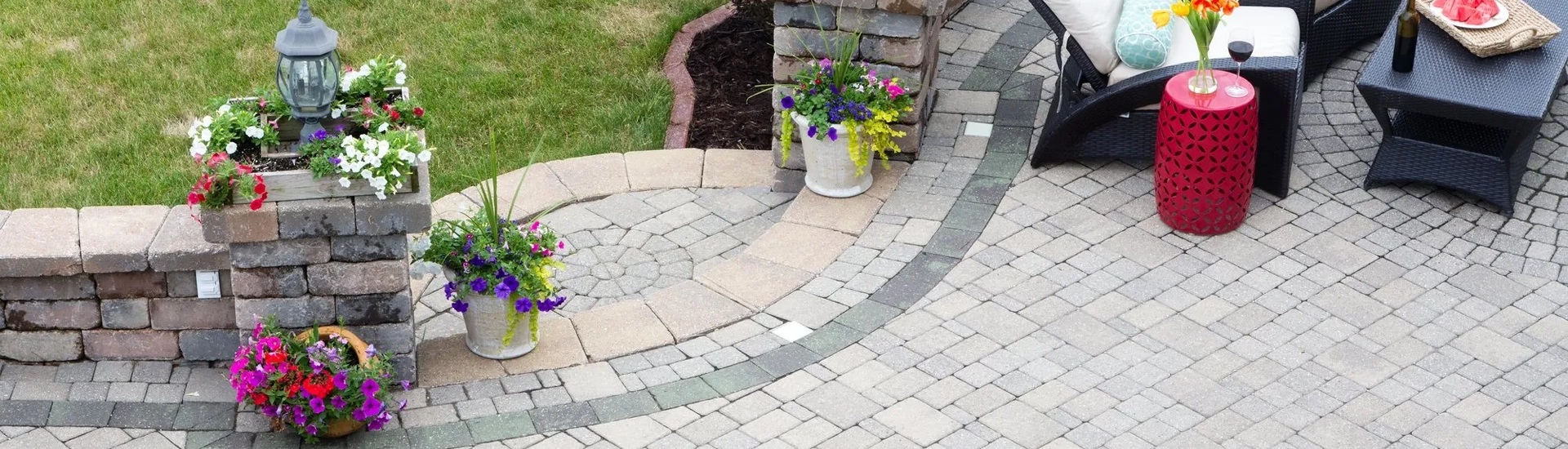
On the other side, Pavers consist of single pieces made up of concrete, clay, or natural stone. They provide a luxurious and textured appearance with many patterns, such as herringbone or basketweave. Concrete is a single, continuous slab, whereas pavers provide an architectural feature to the landscape.
Concrete Patio Benefits & Drawbacks
To make an informed investment, understanding the concrete patio benefits and drawbacks is essential.
The Benefits
- Affordability: Usually, as compared to masonry work, a standard poured slab has a lower initial concrete patio cost.
- Speed: Once the ground is ready, the process of installation is comparatively fast. The pour happens in a single session.
- Smooth Surface: It is a good choice for furniture stability. Also, it is very easy to sweep or shovel during the winter months.
The Drawbacks
- Cracking: During the ground shifts and freeze-thaw cycles, the chances of concrete cracking are higher.
- Staining: If not closed properly, it can absorb oil, grease, and rust as it is a porous material.
- Repair Difficulty: When there is cracking of the concrete, repairing it often leaves a visible “scar,” which makes it harder to restore to its original look.
Paver Patio Installation Advantages
Pavers are considered to be among the most durable patio materials for outdoor spaces by many experts. Flexibility of the system is one of the main advantages of paver patio. Pavers can easily move with the natural shifts of the earth without cracking. This happens because of their separate units, set on a bed of sand and shovels.
Moreover, right after installation, pavers are ready for use. Concrete requires a “cure time” of several days, but in the case of pavers, you can set up your grill right there. They also provide superior drainage because they can facilitate water to permeate through the joints rather than pooling on the surface.
Concrete vs Pavers for Backyard Patio: Side-by-Side Comparison
Below is a quick breakdown of how these materials stack up against each other, so you can easily visualize the differences:
| Feature | Poured Concrete | Interlocking Pavers |
| Initial Cost | Lower | Higher |
| Lifespan | 15 to 25 Years | 30 to 50+ Years |
| Maintenance | Sealing every 2 to 3 years | Weeding and joint sanding |
| Repair | Difficult, Visible patches | Easy, replace single units |
| Weather Resistance | Prone to frost heave cracks | Flexible, moves with soil |
| Installation Time | 1 to 2 days (plus curing) | 3 to 5 days (ready instantly) |
Choosing the Best Patio Materials for Homes
Local geography is a major factor when choosing a concrete patio vs. a paver patio in Utah. In regions with some heavy soil issues and severe temperature fluctuations, the ground expands and contracts significantly. Pavers are often the best patio material for homes because of their interlocking design. This prevents the structural failures commonly seen in large concrete slabs.
However, concrete patio installation services are popular for their sleek look, but homeowners must weigh that against the potential for future cracks in varied climates.
Maintenance & Long Term Care
You can use long-lasting patio construction materials to their full potential with the proper care. Paver patio maintenance is sweeping new polymeric sand occasionally. This helps keep the joints tight.
Concrete maintenance is more about protection. You need to reseat the surface every few years to prevent moisture from seeping in. Otherwise, this moisture can penetrate deep inside and can cause scaling.
While both options are good, pavers are replaceable. If one stone is stained, you can just pull it out and replace it with a new one.
Ready to Upgrade Your Outdoor Space?
Choosing between concrete and pavers isn’t just about the look. It’s about how the material handles the specific soil and temperature swings on your property. After years of installing both across Utah’s unique geography, we’ve found that while concrete offers a beautiful, modern look, pavers are often a long-term investment for homeowners who want to avoid the inevitable cracks, caused by our heavy freeze-thaw cycles.
The key to a successful renovation is to find an appropriate balance between style, budget, and durability. Whether you are looking for a classic look or a modern aesthetic, we are here to assist you.
Claim your free design consultation today. Let us walkthrough, evaluate your soil and build a patio that stays beautiful for years.
FAQs
Which material is better for a DIY project?
While homeowners attempt their own patios, choosing the right patio material for their home often requires professional equipment and tools. Concrete requires precise timing for the pour and finish, and pavers require extensive excavation and base compaction to remain level over a period of time.
Are pavers or concrete more slip-resistant?
Pavers and concrete can both be made slip-resistant. Concrete can be given a “broom finish” for texture, whereas most pavers have a naturally textured surface that provides excellent traction even when wet.
Does a paver patio increase home value more than concrete?
Generally, yes. Most real estate experts believe that premium pavers are more reliable and present a modern look, while being affordable.
